
Radiotelephony simulator for European flight schools
Radio practice with a tower that reacts.
At your own aerodrome: if it is not in yet, we build it within two working days, before you decide. Layouts from map data, not a certified survey.

Your instructors see every student's sessions, mistakes and progress over time, and open any debrief.
Set up three student sessions Name your aerodrome
Three of your students fly 10 minutes each on your aerodrome; one of your instructors opens their debriefs. No cost to your school.
- Positions
- Tower, Approach, Ground, AFIS
- Services
- ATC, AFIS, AGCS
- Phraseology
- ICAO and UK CAP 413
- Language
- Aviation English
A training aid, not an approved or certified device. All limitations
Each readback is marked element by element.
A wrong or missing readback gets the controller's response and the session carries on; the debrief counts it as a mistake.
-
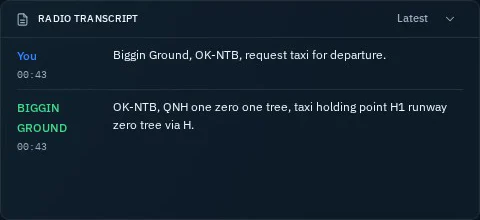
Taxi clearance to holding point H1.
-
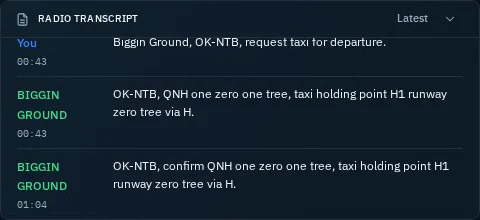
No readback, so Ground says confirm.
-
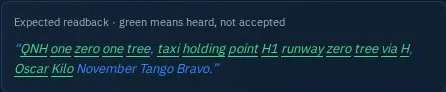
Expected readback: green as it is heard.
-
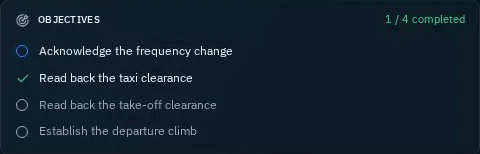
Readback received; the objective ticks.


The tower reacts as on frequency.
-
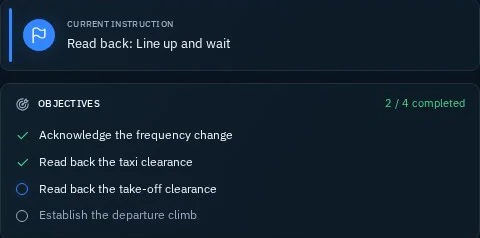
Ready for departure: line up and wait.
-
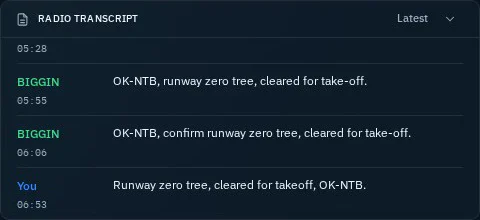
No readback: the tower says confirm.
-
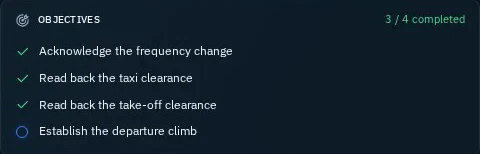
Readback given; the take-off objective ticks.
-
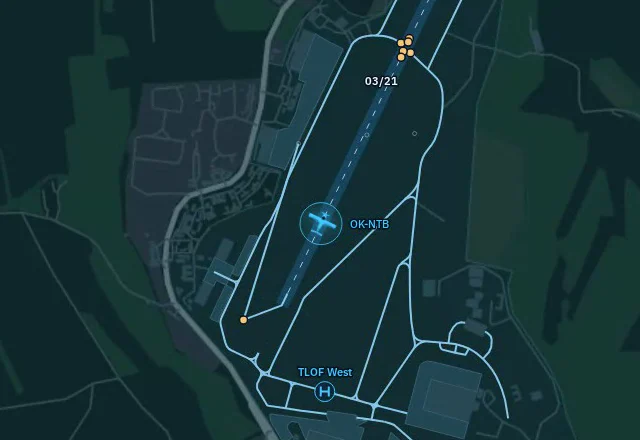
Take-off roll.


-
Live traffic.
Simulated aircraft move and call; the controller delays or cancels clearances around them.
-
Live voice beta.
The student speaks; the controller answers by voice.
-
Say again, speak slower, words twice.
Repeated in the original wording.
-
AFIS and air/ground.
The matching simulated service, not ATC.
The radio inside a flying aircraft.
Aircraft profiles C172, ATR 72-600 and H125. Loading, angle of attack and configuration shape the flight.
Power, brakes and controls can partly fail.
-
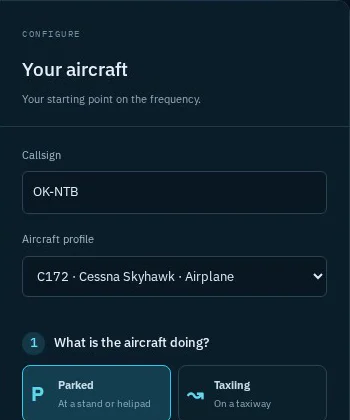
Scenario sandbox, beta: callsign and aircraft profile.
-
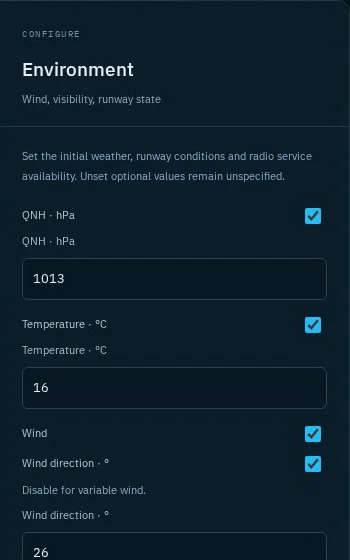
Environment: wind, visibility, runway state.
-
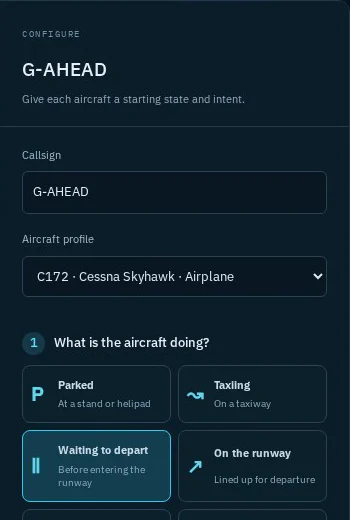
Other traffic, waiting to depart.
-
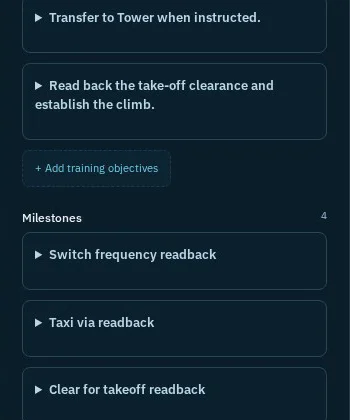
Objectives and milestones.
-
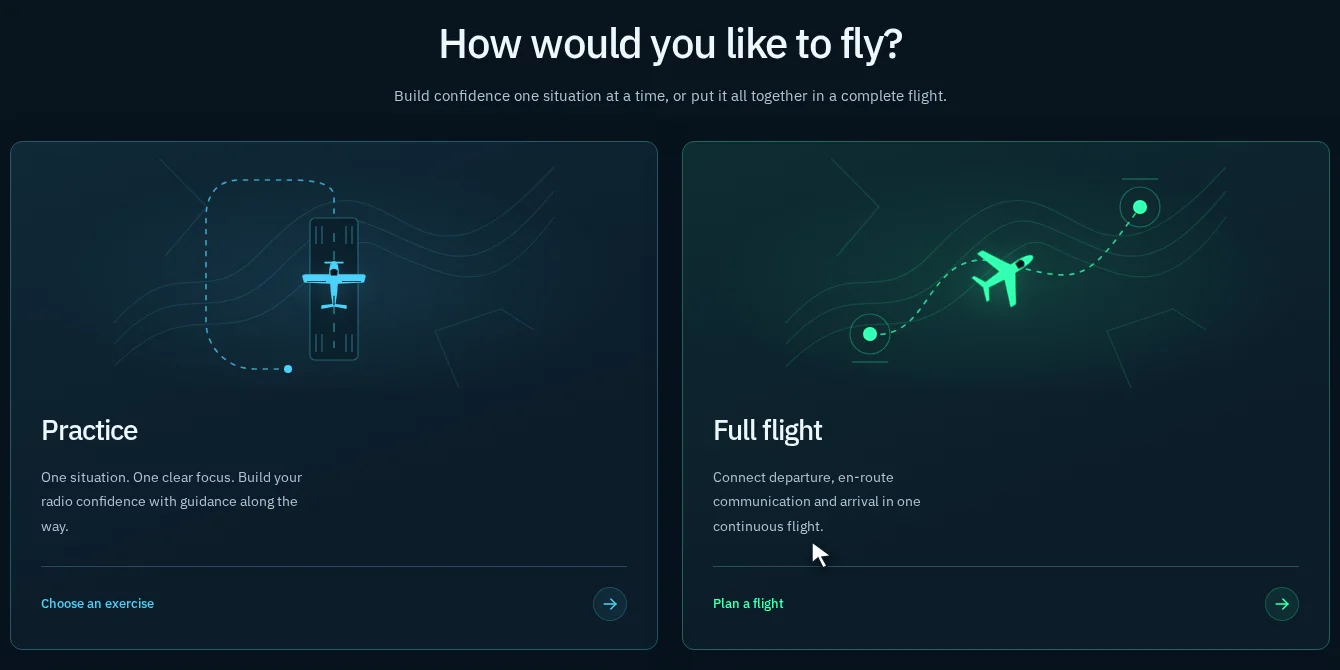
One situation, or a full flight.
-
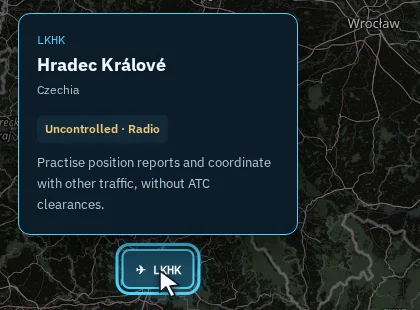
Pick the aerodrome on a map.
-
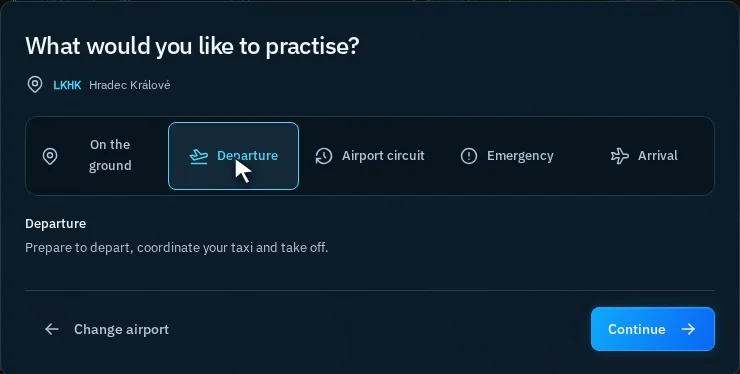
Choose the focus, emergencies included.
-
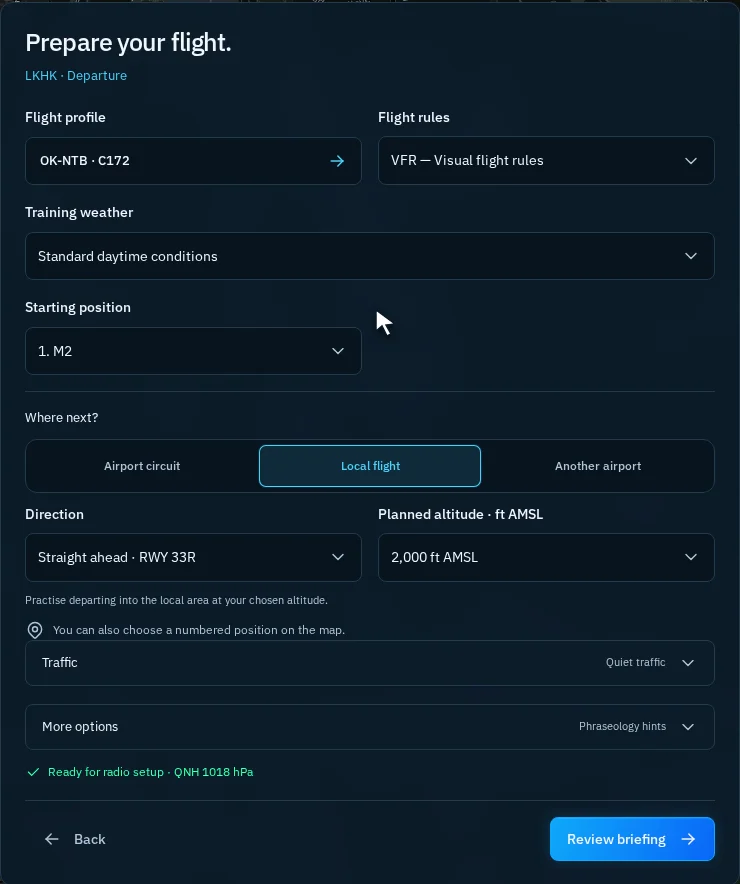
Prepare and brief the flight.


Every session ends in a debrief your instructors open.
One dashboard: every student's sessions, mistakes and progress over time.
How your school would use it: inferred, not measured. Students practise between lessons; instructors brief what the debrief shows is still wrong, so aircraft time goes on flying.
-
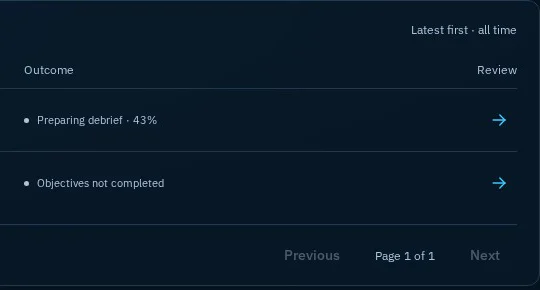
Session ended: debrief in preparation.
-
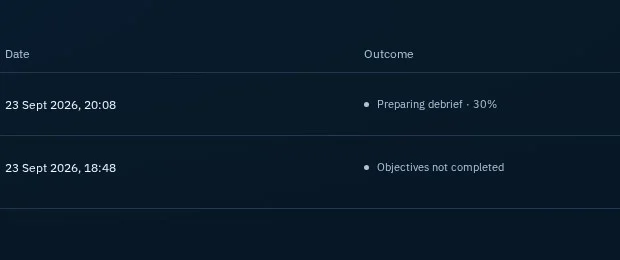
One student's sessions and their outcomes.


What BeWinged is not.
- 1
Not approved or certified. A training aid; it does not count towards flight-time or FSTD minima.
- 2
Not an air traffic service. The controller is simulated and controls no traffic.
- 3
Not a language proficiency test. FCL.055 language proficiency and the UK FRTOL practical test are assessed by the examiners and bodies your authority designates.
All limitations
- 1
Regulatory status. Not an approved or certified device; it does not count towards flight-time or FSTD minima.
- 2
Air traffic service. The controller is simulated and controls no traffic; your instructors stay in charge of training.
- 3
Proficiency testing. Language proficiency under FCL.055 and the UK FRTOL practical test are assessed by the examiners and bodies your authority designates, not by BeWinged.
- 4
Training measurement. No peer-reviewed study isolates RT simulator practice for EASA students; we are running that measurement with design partners.
- 5
Data sources. Aerodrome layouts come from pinned map data, not a certified survey; some connectors and apron positions are training constructions.
- 6
Beta components. Live voice, the scenario sandbox and the full IFR flight (one authored C172 flight between two fictional aerodromes) are in beta.
Last reviewed by Jan Hobler and Jan Moudrý.
What heads of training ask first.
What is BeWinged?
BeWinged is a radiotelephony (RT) simulator for flight schools: students practise radio calls against a simulated controller that reacts as a controller would on frequency, and every session ends in a debrief the school's instructors open. It is made by FlyBeWinged s.r.o. in Hradec Králové, Czech Republic.
Who is it for?
Approved and declared training organisations (ATOs and DTOs) in EASA states and the UK. Students practise Tower, Approach, Ground and AFIS calls, across ATC, AFIS and AGCS services; instructors see every student's sessions, mistakes and progress on one dashboard.
What does it cost?
Three of your students each fly a 10-minute session on your own aerodrome, and one of your instructors gets an account to open their debriefs. These sessions cost your school nothing and take 45 minutes of its time. After them, a paid pilot and then an annual school licence are agreed on a call.
Where does it sit in our training programme?
As computer-based RT practice alongside your instruction, used when your instructors decide. Your instructors stay in charge of training, and it does not count towards flight-time or FSTD minima.
Is BeWinged approved or certified?
No. BeWinged is a training aid, not an approved or certified device. It is not an air traffic service: the controller is simulated and controls no traffic. It is not a language proficiency test either.
Which phraseology and language does it use?
ICAO phraseology and UK CAP 413, in aviation English, as on a real frequency. No other language is offered.
How is student data handled?
A data processing agreement for student session data is available on request. The website privacy notice covers the session request form only.
Team